

You’ve noticed your ears feel full, to the point of discomfort. Sounds have become muffled recently. You’re even struggling to hear people speaking right in front of you.
If that stuffy feeling in your head just won’t go away, you may need to schedule a tympanometry test because it’s a classic sign of a middle ear issue. The noninvasive evaluation is quick and painless.
Read on to learn what you can expect during the process.
What is a Tympanometry Test?
A tympanometry test is an assessment of your middle ear function. Sound waves travel through your ear canal and meet your tympanic membrane (eardrum), causing it to flex and convert those waves into vibrations that are sent to your inner ear.
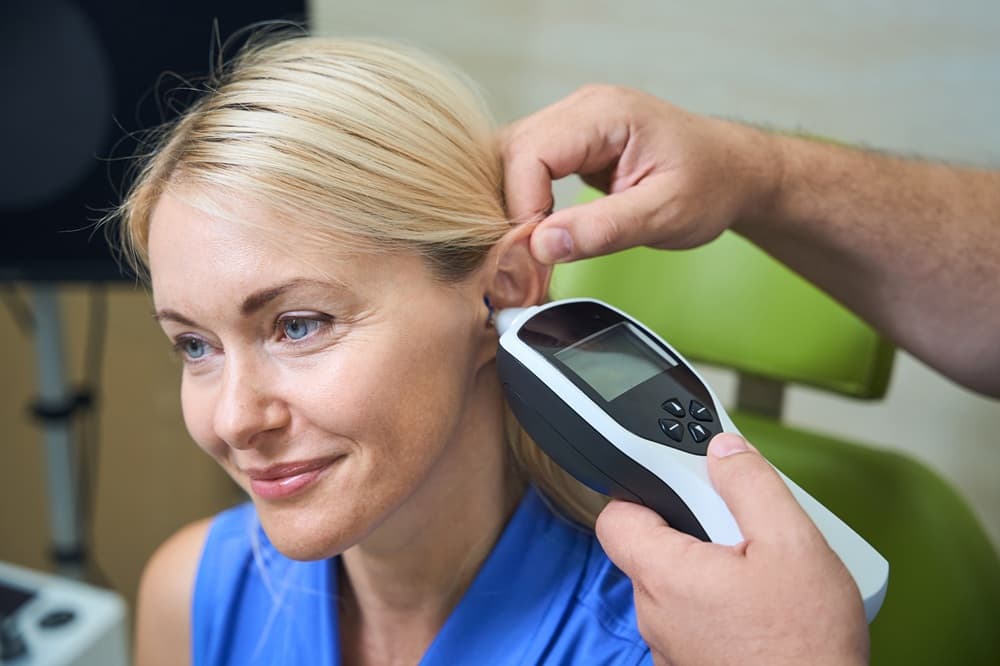
Any issue with your middle ear can disrupt that process, so a tympanometry test is necessary to determine if there are blockages or inflammation getting in the way. A small device called a tympanometer is inserted into your ear to alter the air pressure in your canal and measure how your eardrum responds.
It differs from an audiometry test, which measures how well you hear different sounds and tones.
Signs You Need to Schedule One
- Sounds appear muffled, dampened or distant.
- You develop frequent ear infections.
- Your ears feel full or painful.
- You experience popping or crackling sensations in your ear canal.
- You feel imbalanced or dizzy.
- Your ears ring.
- Children pull at their ears, struggle to follow directions or become irritable.
What Causes Middle Ear Hearing Loss?
There are several causes related to the inner workings of your ear canal and sinus pathways that can contribute to conductive hearing loss, including:
Otitis media: Ear infections, particularly those that create fluid buildup in your sinuses and ears, can prevent sound waves from traveling through your middle ear.
Earwax buildup: Excess earwax can prevent sound from reaching your eardrum.
Eustachian tube dysfunction: Your Eustachian tube connects your middle ear to the back of your nasal passage and regulates fluid and pressure in your middle ear. Functional issues can lead to ear inflammation and hearing loss.
Perforated eardrum: A tear or puncture in your eardrum from infection, trauma or loud noise reduces your eardrum’s ability to flex.
Otosclerosis: The tiny bones in your middle ear can develop growths that prevent them from moving with your eardrum when converting sound waves to vibrations.
Barotrauma: If you fly or scuba dive often, the frequent pressure changes could damage your eardrum.
What to Expect During the Test
A tympanometry test only lasts a few minutes. Here’s how it’s done:
- You’ll sit upright in a chair while staying still and quiet to avoid interfering with the test.
- An audiologist will insert the probe end of the tympanometer into your ear until it fits snugly in your ear canal.
- One of the probe’s components emits tones, a second changes the air pressure in your ear and a third records your eardrum’s movements in response to the stimuli.
- The probe is removed from one ear, and the process is repeated in the other.
You don’t have to prepare for a tympanometry test, and there aren’t any risks associated with the process. If your child is undergoing the evaluation, you may need to hold them in your lap to help them remain still.
Understanding a Tympanogram
A tympanogram is the result of a tympanometry test. It shows the maximum movement and flexibility of your eardrum in response to stimulation.
There are three main types of tympanometry results:
Type A: This classification represents normal middle ear function without fluid, pressure or eardrum structural issues. Type As may suggest a stiffer eardrum, while Type Ad reveals a slightly flaccid membrane.
Type B: This result signifies a lack of eardrum movement typically caused by fluid, a perforated eardrum or earwax blocking your ear canal.
Type C: A Type C tympanogram suggests an issue with your Eustachian tube that prevents it from equalizing the pressure in your middle ear properly.
Type A results don’t require further intervention. Types B and C may demand further evaluation from an ENT specialist who can diagnose and address those issues.
Ready to Schedule Your Tympanometry Test?
You don’t have to live with ear discomfort or fullness. Seeking hearing testing at Hearing Associates allows you to get back to enjoying life. We offer a variety of hearing tests to provide you with precise diagnoses and personalized care. Call one of our offices or request an appointment online.